The Walk to the Ground Is Part of Matchday
A matchday walk can turn the approach to the ground into part of the occasion, with a simple plan for route, pace, sounds and the way home.
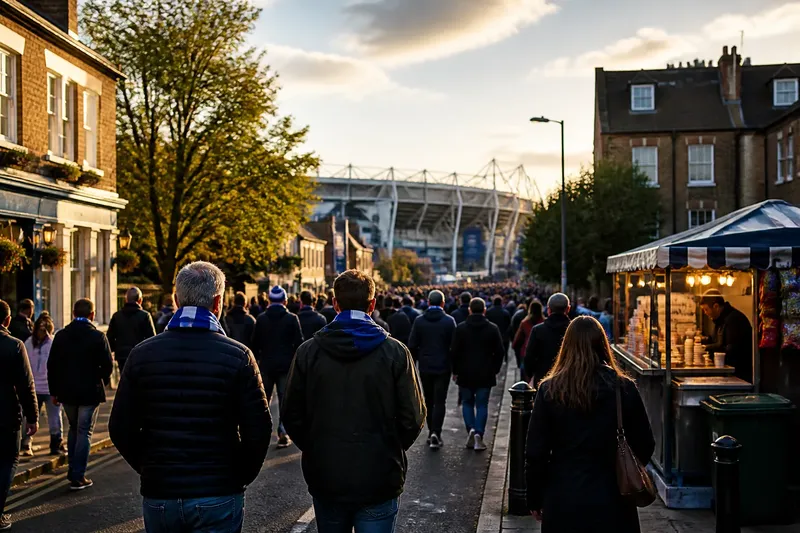
You leave the bus two stops early, and the street ahead is already carrying a different sound: a vendor stacking cups, a radio behind an open window, a few voices moving in the same direction. The walk to the ground has begun before the turnstiles, and its small changes can shape how the match feels before anyone takes a seat.
Planning the walk to the ground does not require a special route or a long detour. It means giving the approach enough attention to register its sequence: where the crowd gathers, where the street narrows, when the venue first appears, and which sounds grow clearer as you get closer. A familiar approach can be ritual; a new one can become part of the memory of a visit.
A week before
Start with the practical outline. Check your ticket information, the venue’s public transport advice, and any current access or road notices. Choose a starting point you can reach without a scramble, then identify a direct route and a straightforward alternative. The point is not to choreograph every turn. It is to avoid making a last-minute map search the loudest part of the afternoon.
Look at the route on a street map, then notice what kind of ground it crosses. A riverside path, a high street, a station concourse, and a residential block offer different approaches even if they lead to the same entrance. Mark useful landmarks that are easy to recognize in person, such as a bridge, a library, or a row of shops, rather than relying on a tiny blue dot that may lose its nerve near tall buildings.
If you are meeting someone, agree on a clear meeting place before travel. A station exit or a named public square is easier to find than “somewhere near the corner.” Also agree on what happens if one person is delayed: continue toward a specific landmark, wait in a particular public spot, or meet at the entrance. Keep the arrangement simple enough to remember without consulting a group chat at every crossing.
The day before
Check the route once more for changes that could alter the walk: a closed station entrance, a road diversion, or a venue notice about an approach. Follow the relevant transport operator and venue information rather than assuming an old route description still applies. If your route includes a narrow passage or a busy crossing, make a note of a broader alternative that keeps the journey calm.
Set out what you need for the visit: ticket, travel card or payment method, phone, and weather-appropriate clothing. A small bag is usually easier to carry through a crowd than a collection of loose items. Venue policies vary, so check its bag and entry rules before leaving; where the right choice depends on a label, manufacturer instructions, or local rules, follow those instructions rather than improvising at the gate.
Think about whether you want company for the whole walk or only part of it. Some people like the conversation to build as the ground gets closer; others prefer a quiet stretch to watch the neighborhood change. Neither preference needs defending. A walk is not improved by turning it into a test of devotion.
On the way
Leave with enough room for ordinary delays, but do not turn the journey into a race against an imaginary deadline. Set a pace that lets you notice the route while staying aware of traffic and other pedestrians. If a crowd is moving quickly, keep to a safe, predictable line rather than stopping abruptly to take a photograph or check directions.
Notice how the sound changes by location. Near a station, announcements and brakes may dominate; farther along, conversation, food stalls, or the venue’s public-address system may come through. These details make a useful sequence to remember later. The approach works a little like a kettle coming to a boil: there is no single instant when the occasion begins, only a gradual change you recognize once it is underway.
Say you are visiting a ground where you have not been before and your train arrives earlier than expected. You choose the marked pedestrian route, pause at a public square to check the entrance on your ticket, then continue as the crowd thickens and the venue’s signs become visible. The observable result is not a better match; it is a calmer arrival with a route and a few landmarks already attached to the memory.
Do not assume that the busiest street is the only route, or that a quieter side street is automatically suitable. Keep to public paths and follow signs, stewards, and temporary crowd directions. If the approach feels congested, slow down, leave space, and use the designated route rather than trying to gain time by squeezing through gaps.
At the approach
Let the final stretch stay simple. Put away anything you do not need in your hand, have your ticket ready when the venue asks for it, and follow the entrance information provided for your seat or section. If you are meeting someone, choose a spot that does not obstruct a gate or walkway. Small pauses are easier to manage before the queue than in its middle.
There is no need to reach the entrance in a state of heightened anticipation. The walk can be enjoyable without being solemn, and a conversation about lunch or the weather does not spoil the ritual. The useful part is the transition: ordinary streets gradually give way to the shared attention of people heading to the same event.
Questions on the route?
Should I take the same route every time?
A familiar route can become part of a personal matchday routine, especially when its landmarks and sounds are easy to recognize. Changing it occasionally can reveal another side of the surrounding neighborhood, provided the alternative is open and sensible.
How early should I leave?
Use the venue’s entry guidance and current transport information, then leave room for the delays you can reasonably anticipate. The right margin depends on your journey, access needs, and whether you have to collect or meet anyone on the way.
What if the usual approach is closed?
Follow official diversion signs and venue or transport updates, and avoid crossing barriers or entering restricted areas. If the route becomes unclear, ask a steward or transport staff member rather than guessing from a map while walking.
Can the walk be part of a group ritual?
Yes, if the group agrees on a route, pace, and meeting point that work for everyone. A shared song or recurring stop may suit some companions, while others may prefer conversation; leave room for both without blocking the public path.
After the match
The return walk has its own texture. A result may dominate conversation, but the street sounds, the changed flow of people, and the route back to the station can make the departure feel distinct from the arrival. If the venue or transport staff direct people along a particular way, follow that guidance instead of trying to reproduce the outward route.
On the next visit, keep one note about the approach: a landmark that helped, a sound that marked the final stretch, or a point where the route felt crowded. That small observation can make the walk to the ground easier to plan and more vivid to recall, without turning an ordinary journey into an elaborate production.
Choose a route you can follow comfortably, then leave your attention free for what changes along it. The turnstile may mark entry to the event, but the first familiar voice, rising murmur, or glimpse of the stands can arrive several streets earlier.