A First Visit to an Unfamiliar Ground
A first visit to an unfamiliar ground feels easier when you choose what to notice, leave room to get oriented and shape the day around your own interests.

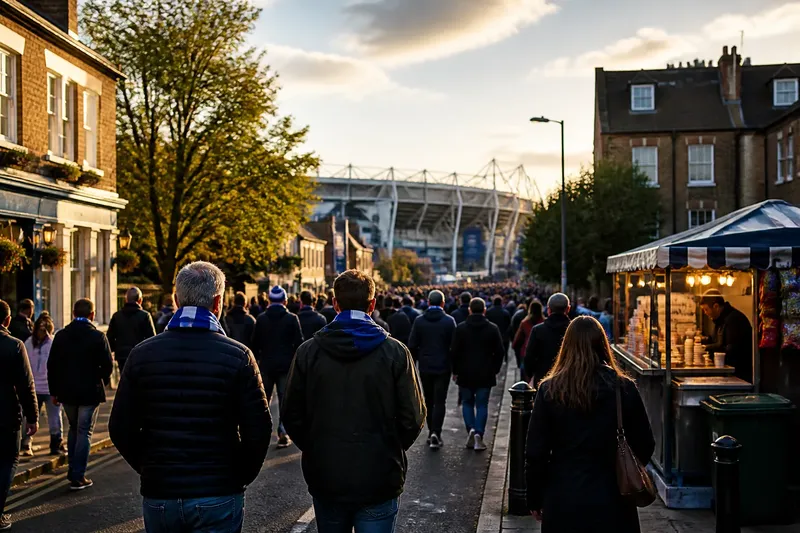
You reach the turnstiles with a ticket open on your phone, a scarf folded under one arm and no clear idea which sound to follow. A first visit to an unfamiliar ground is easier when you decide what to notice, give yourself time to get oriented and let the day take a shape that suits you.
There is no requirement to arrive with a complete understanding of the club’s customs. A few deliberate choices can turn a busy venue into a place you can read at your own pace.
1. Choose a noticing theme
Before setting out, pick one thing you would like to pay attention to beyond the score. It might be how supporters respond to a lull, where the players gather before the match, or the small routines around food and conversation. One theme is plenty; a first visit is not a field survey.
A theme gives your attention somewhere to rest when the crowd’s movements feel unfamiliar. It also helps you notice details that can disappear beneath the broad impression of noise and scale.
- Supporter rituals: Notice when people stand, sing, clap or fall quiet, without assuming every section follows the same pattern.
- Ground details: Look for signs, old gates, wall colours, visible beams or the way different seating areas meet.
- Matchday language: Listen for a local nickname or recurring phrase and consider asking a nearby supporter what it means.
- Shared pauses: Watch what happens before kick-off, during a break or after a significant moment, not only during active play.
Keep the theme flexible. If you planned to notice chants but become more interested in the people exchanging food in the row behind you, follow that instead. Attention is a guide, not a contract.
2. Leave room to orient
Allow time to find the entrance printed on your ticket, locate your seat and understand the basic layout before settling in. Check the venue’s official information for entry arrangements, permitted bags and any access details relevant to your visit. A screen map can point you toward a gate; a sign at the ground may tell you that the route has changed.
Once inside, pause somewhere that does not block a queue or walkway. Find the nearest section marker, an information point and a clear route back to your seat. You do not need to memorise the whole venue. A few dependable landmarks are more useful than a hurried tour of every concourse.
Say you arrive at a ground with several entrances and your ticket names a particular section. You check the venue map before travel, follow the section signs on arrival and stop at a steward’s post when one sign is unclear; the expected result is a calmer route to your seat, with less backtracking and more time to settle. It is an invented situation, but the useful habit is ordinary: ask before uncertainty becomes a small parade.
For a large or unfamiliar venue, keep your ticket accessible and note how to get back to the entrance you used. If you are visiting with someone else, agree on a simple meeting point in case you become separated. Keep that point out of busy passageways.
3. Make the first hour yours
Choose an arrival pace that leaves a little breathing room without turning the day into a timed itinerary. Some people like to watch the ground fill; others prefer to arrive closer to the start and avoid lingering. Neither approach is more authentic. It is a sporting event, not an examination in advance preparation.
Use the time before the match for one or two things you actually care about. You might find a programme, look at a display near the entrance, get something to eat or simply watch how people make their way to their seats. If a queue is long or a space feels crowded, there is no obligation to wait just because it appeared in your plan.
Keep practical needs in view. Locate the nearest restroom and check whether food or drink can be taken into your seating area. Venue rules and access arrangements differ; follow posted signs and staff directions rather than relying on assumptions from another ground.
4. Read the room gently
Supporter customs are usually learned by watching, and observation is a perfectly sound way to begin. Notice whether people around you stand during play, join in a song or keep conversation low. Follow what feels comfortable, while leaving others room to enjoy the match in their own way.
Do not treat one person’s behaviour as a rule for an entire section. A chant may belong to a particular group, and a moment of quiet may mean different things in different places. If you want to join in but cannot make out the words, listening for a while is participation of its own.
Small questions can help, provided you choose a natural moment. Before the match or during a break, you might ask someone nearby what a chant refers to or whether a particular area has a custom worth knowing. Keep the question brief and accept a short answer; the person may be watching the game rather than hosting a seminar.
5. Keep an easy record
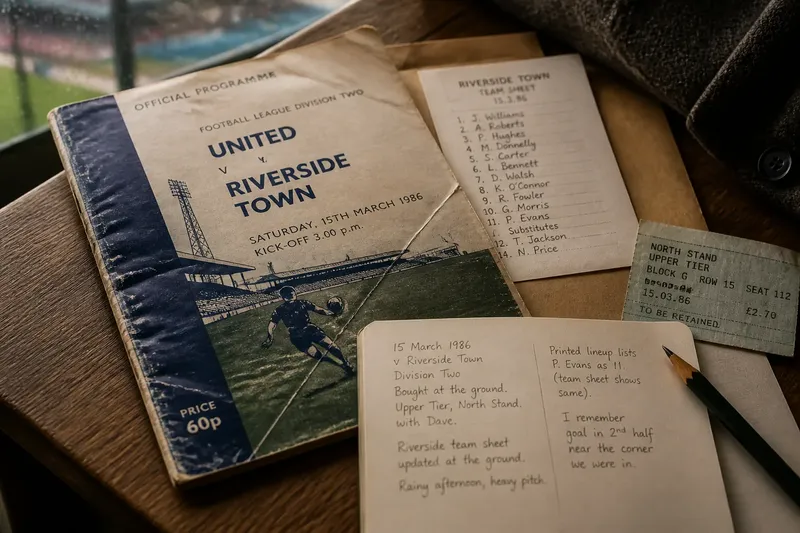
A first visit often leaves behind a few vivid fragments rather than a tidy account: the sound under a roof, a view through the goalposts, a phrase you heard twice, or the way strangers reacted together. Make a note on your phone or in a small notebook after the match, when the details are still clear.
Keep the record specific. Instead of writing that the atmosphere was “great,” note what created that impression: a section singing through a stoppage, a pause before the teams appeared, or the crowd’s attention shifting as one. Concrete details are easier to remember later and less likely to turn the day into a generic highlight reel.
Take photographs only where permitted and be considerate of the people around you. A quick image of a sign or a view from your seat may be enough. Your memory does not need visual evidence for every minute; even a ticket stub can do the modest job of marking where the day happened.
6. Let the match change the plan
A planned focus can make a visit more rewarding, but the event itself may pull your attention elsewhere. A weather change, a long stoppage or an unexpected conversation can become the detail you remember most. Leave space for that shift rather than trying to force the day back onto an itinerary.
You can also choose when to stop exploring. If you have found your seat, seen what interested you and feel ready to watch, settle in. There is no need to use every minute before kick-off productively. The best orientation sometimes consists of learning where you are, then looking at the match.
Questions for a first visit?
How early should I arrive at an unfamiliar ground?
Allow enough time to find the correct entrance, pass any entry checks and locate your seat without rushing. The useful arrival time depends on the venue’s guidance, the event and how much you want to look around.
What should I bring to a first match?
Bring your ticket and any essentials you normally need, then check the venue’s rules for bags, food, cameras and other items. A small notebook or phone note can help you remember details, but neither is necessary to take part.
Do I need to know the club’s songs or traditions?
No. You can listen first, join in when you feel comfortable or simply watch the match. Customs vary between sections, so treat the people around you as a better guide than an assumption about how every supporter behaves.
What if I cannot find my seat?
Check the section and row information on your ticket, then ask a steward or venue staff member if the signs do not make sense. Staff can direct you without requiring a guess through the concourse.
7. Leave with one detail
On the way out, choose one detail to carry with you: a view, a sound, a local phrase or a small exchange with someone nearby. That choice gives a first visit to an unfamiliar ground its own shape, even if the score fades quickly from memory.
If you return, you will have a point of comparison without needing to repeat the same plan. A ground becomes familiar gradually: one entrance, one shared rhythm and one remembered corner at a time.